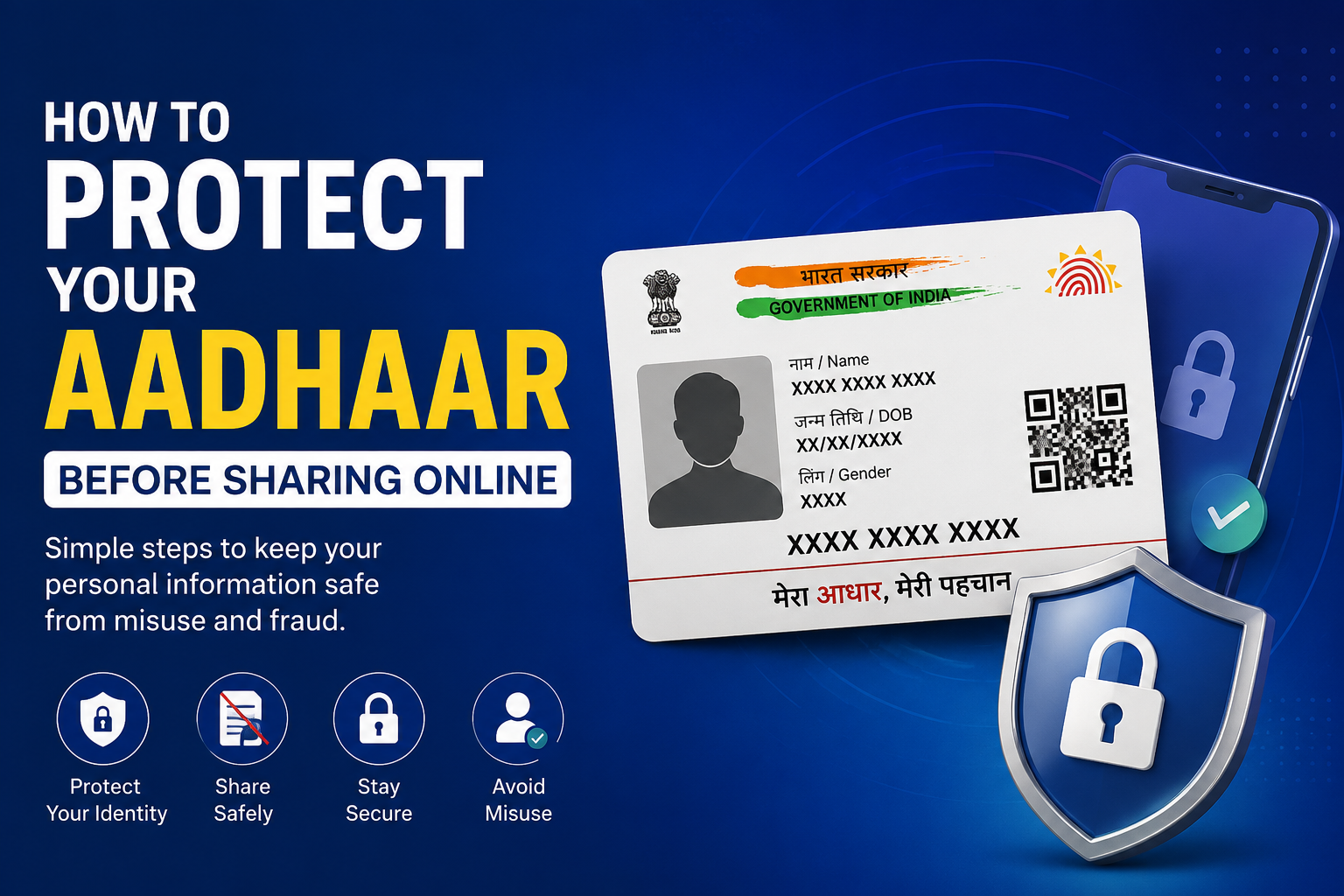
Table of Contents
- Why Aadhaar Needs Protection
- Common Risks of Sharing Aadhaar Online
- How to Share Aadhaar Safely
- Mistakes You Should Avoid
- What to Do If Your Aadhaar Is Misused
- Frequently Asked Questions
Why Protecting Your Aadhaar Matters
Aadhaar Card is one of the widely used identification documents in India. Using the Aadhaar Card, one can open a bank account and even use it to register themselves through KYC and obtain government services or SIM card. Since the Aadhaar Card carries some personal information of individuals, it has become a favorite target of hackers.
The fact of the matter is that people often use WhatsApp, email, Telegram, social networking sites, and even strange websites in order to share their Aadhar card without worrying about the consequences that might follow. There may come situations when you need to give out your Aadhar number to anyone, but sharing the complete card can put you at risk.
Digital fraud risks keep varying every year. Typically, such fraudsters use all kinds of information gathered from multiple sources rather than relying on a single source of data. While having an Aadhaar alone will not instantly make you a victim of fraud, when combined with other information, it leaves you vulnerable.
Discussing the correct information at the right time regarding Aadhaar is one of the easiest ways to avoid digital dangers that come up. It just takes a few things from your side, and privacy levels increase greatly without putting you through any inconvenience.
Common Risks of Sharing Aadhaar Online
Each and every time you transfer or send your Aadhaar card electronically, you give up some amount of control over the destination of this document. Even renowned organizations have been victims of data breaches and have mismanaged information before.
Some of the most frequently occurring risks are: Identity Theft; Account Setup Frauds; Unauthorized Know Your Customer Validation; Phishing Scams; Money Laundering; Social Engineering; Impersonations; and Privacy Risk.
Personal information can be retrieved using various methods by cybercriminals. The information gathered from Aadhar card may be used along with the information that is retrieved from social media accounts or even from other websites online.
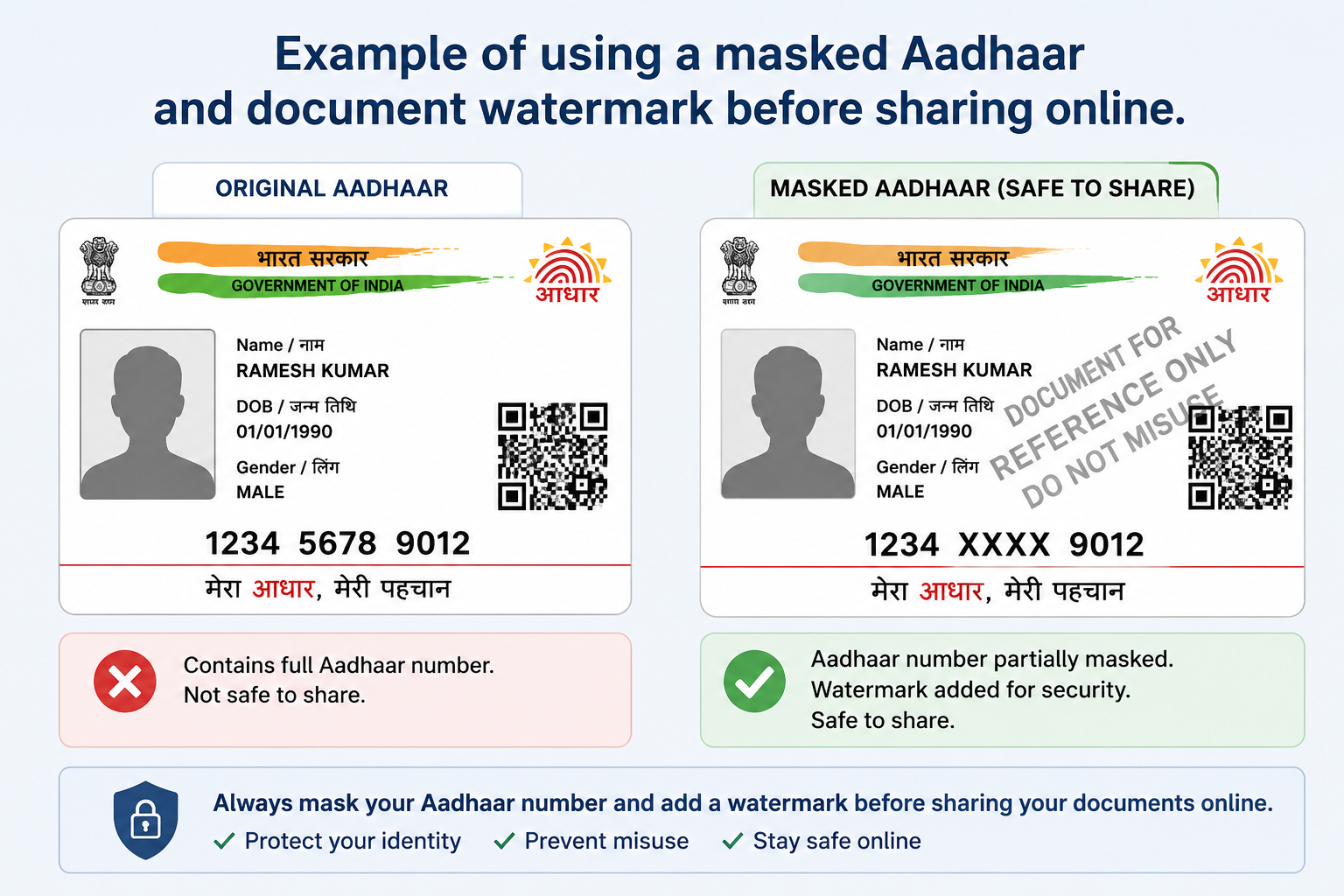
Illustration showing common online risks associated with sharing Aadhaar documents.
📚 Read More
Best Practices Before Sharing Your Aadhaar
Never send your Aadhaar without ensuring that it is indeed required by the other party in its entirety. Often enough, the information needed pertains to only some particulars contained therein. Use a masked Aadhaar wherever you can, instead of sending the full one. The masked Aadhaar reveals just the last four digits, whereas the rest are masked.
Make sure to identify the company asking for your Aadhaar. Criminals usually claim to be from banks, couriers, the government, or any other customer service representatives. Do not believe anything that comes to you through the message or call; rather contact the company through their website or customer care number.
Avoid uploading your Aadhaar card on any unknown site. Before you submit your confidential documents online, check whether it is a secure website with an encryption method and also a legal one. Note that fraudsters may create fake sites with almost the same URL as popular websites.
While sending your Aadhaar by email or through messaging services, make sure that the other party is authenticated. Do not share your Aadhaar card in public groups or on social media because it may be forwarded by others without your knowledge.
Another extremely useful tip is including a watermark when using the digital version. For example, including a phrase like “For KYC Verification – ABC Bank – July 2026” will make it extremely difficult for someone to use your document elsewhere.
Mistakes You Should Always Avoid
Despite the best of intentions, some basic errors might unnecessarily expose you to privacy risks while sharing your Aadhaar number. The first and one of the biggest such errors is that you share your Aadhaar instantly after being called or messaged through WhatsApp from some person claiming to be from the bank, courier service, employment agency, or some other governmental or nongovernmental office.
Do not upload your Aadhaar card on any social media sites, even if some portions of it are blurred out. Criminals could still see the information from high-definition images and use QR codes or other identification numbers.
Under no circumstances should one keep copies of his/her Aadhaar cards without protection in the public cloud drive space. In case it becomes absolutely necessary to use cloud storage, then make sure that the file is password protected.
Yet another error that occurs frequently involves forwarding the same Aadhaar card to different entities without an identification watermark on it. A customized watermark ensures that the card is meant for a particular entity.
It is also advised that you do not keep unnecessary backups of your Aadhaar on your mobile phone. In the case of loss of your phone or the presence of any malicious software, such files may become vulnerable to being accessed by hackers.
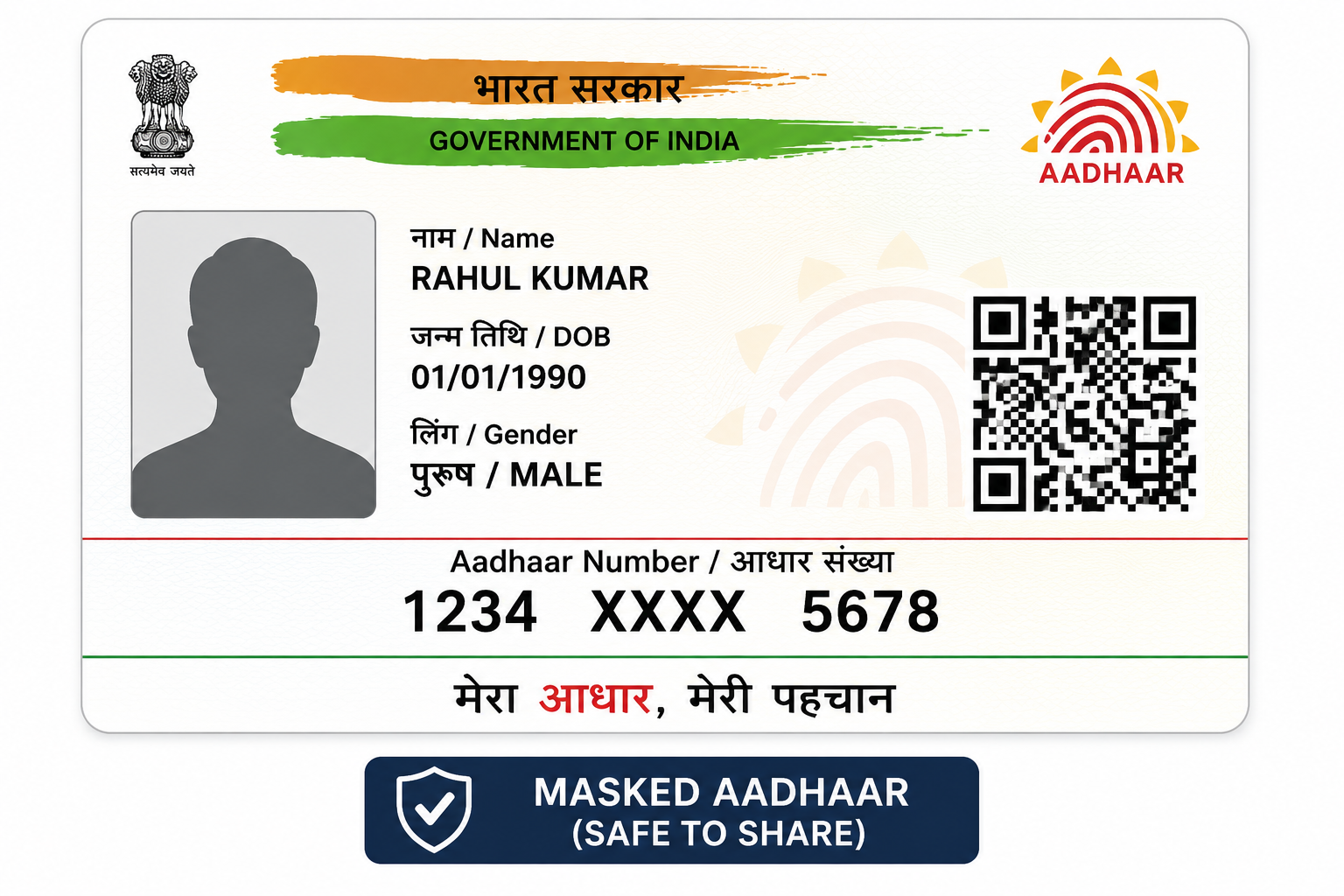
Example of using a masked Aadhaar and document watermark before sharing online.
What to Do If You Think Your Aadhaar Has Been Misused
In case you think your Aadhaar information has been made available to the wrong person or it is leaked on the Internet, do not panic but make sure that you respond as soon as possible.
Begin by checking the places where your Aadhaar number has been used recently. Look through your emails, messaging services, cloud services, and downloaded files for any leakage sources.
In case you think there is any suspicious Aadhaar authentication happening, then check your Aadhaar Authentication History at the official website of UIDAI to know the details.
In case there is anything suspicious that comes up, report it right away using official UIDAI support services. If there are any concerns about financial accounts, reach out to your bank, credit card issuer, or other financial institutions.
You must also keep track of your emails, online banking apps, and even your mobile number for any unauthorized logins or one-time passwords sent to you.
Quick Aadhaar Safety Checklist
- ✔ Share Aadhaar only when genuinely required.
- ✔ Prefer using Masked Aadhaar whenever possible.
- ✔ Verify the identity of the recipient first.
- ✔ Never send Aadhaar in public WhatsApp or Telegram groups.
- ✔ Add a watermark mentioning the recipient's name.
- ✔ Avoid uploading Aadhaar to unknown websites.
- ✔ Use secure HTTPS websites only.
- ✔ Enable two-factor authentication on cloud storage accounts.
- ✔ Delete unnecessary Aadhaar copies from your phone.
- ✔ Regularly review your Aadhaar authentication history.
Conclusion
Your Aadhaar is one of your most valuable identity documents, and protecting it should become a regular digital habit rather than an occasional concern. Most privacy incidents happen because people share documents too quickly without verifying who is requesting them or why they are needed. Fortunately, preventing these problems is often simple.
Through the use of a masked Aadhaar number, applying watermarks, ensuring the recipient is verified, staying clear of suspicious websites, and checking the authentication history, you can greatly minimize the risks of identity abuse. Responsible document sharing has nothing to do with fear; it is all about making educated choices.
Watch Related Video
Prefer watching? Open this video directly on YouTube.
Frequently Asked Questions
1. Is it safe to share my Aadhaar on WhatsApp?
Only if the recipient is verified and genuinely requires it. Prefer using a masked Aadhaar and add a watermark before sending.
2. What is a Masked Aadhaar?
A Masked Aadhaar hides the first eight digits of your Aadhaar number while displaying only the last four digits.
3. Can someone misuse my Aadhaar?
While Aadhaar has security protections, exposing your personal details can increase the risk of identity fraud and social engineering attacks.
4. Should I upload Aadhaar to every website?
No. Only upload it to trusted and verified websites that genuinely require identity verification.
5. How can I verify a website before sharing Aadhaar?
Check that it uses HTTPS, belongs to a legitimate organization, and has a trustworthy domain name.
6. Is watermarking my Aadhaar recommended?
Yes. Adding a watermark specifying the intended recipient helps prevent unauthorized reuse.
7. Can I delete Aadhaar copies after use?
Yes. Removing unnecessary copies from your phone and cloud storage reduces privacy risks.
8. How do I check Aadhaar authentication history?
You can review authentication activity through the official UIDAI portal using your Aadhaar credentials.
9. What should I do if I accidentally shared Aadhaar?
Review recent activity, monitor your accounts, and contact UIDAI or the relevant organization if you notice suspicious usage.
10. Can Digital Safety Checker tell me whether it's safe to share a document?
Yes. Digital Safety Checker helps evaluate common privacy risks before you share documents, screenshots, or personal information online.
Check Before You Share
Not all requests for your Aadhaar number are valid. Before sharing your personal information with anyone, run an analysis of risks involved using Digital Safety Checker.
Use Digital Safety Checker
Sameer Pal
Sameer Pal is a Content Writer specializing in online security, digital privacy, cyber awareness, and social safety. With over 3 years of experience, he creates practical, easy-to-understand content that helps readers recognize online threats, protect their personal information, and make safer decisions on the internet. His goal is to provide accurate, trustworthy, and user-focused guidance that promotes digital awareness and everyday online safety.
Featured Articles
Before Sending a Screenshot, Read This First
Simple, practical ways to share your Aadhaar safely while keeping your identity and personal information protected.
Read Article
10 Common Online Sharing Mistakes You Should Avoid
The most common online privacy slip-ups people make every day — and easy ways to steer clear of them.
Read Article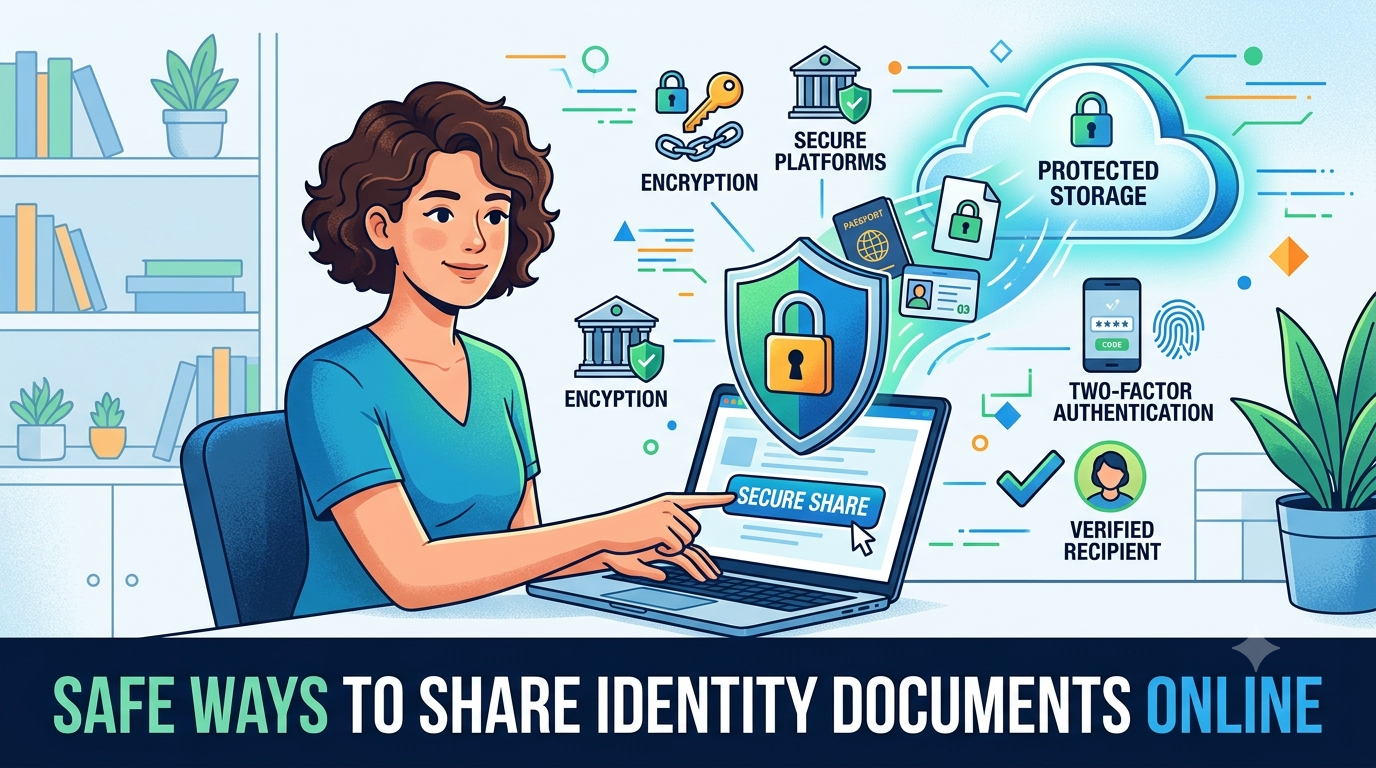
Safe Ways to Share Identity Documents Online
Smart, expert-backed tips for safely sending your identity documents to organizations online.
Read Article